Excavation
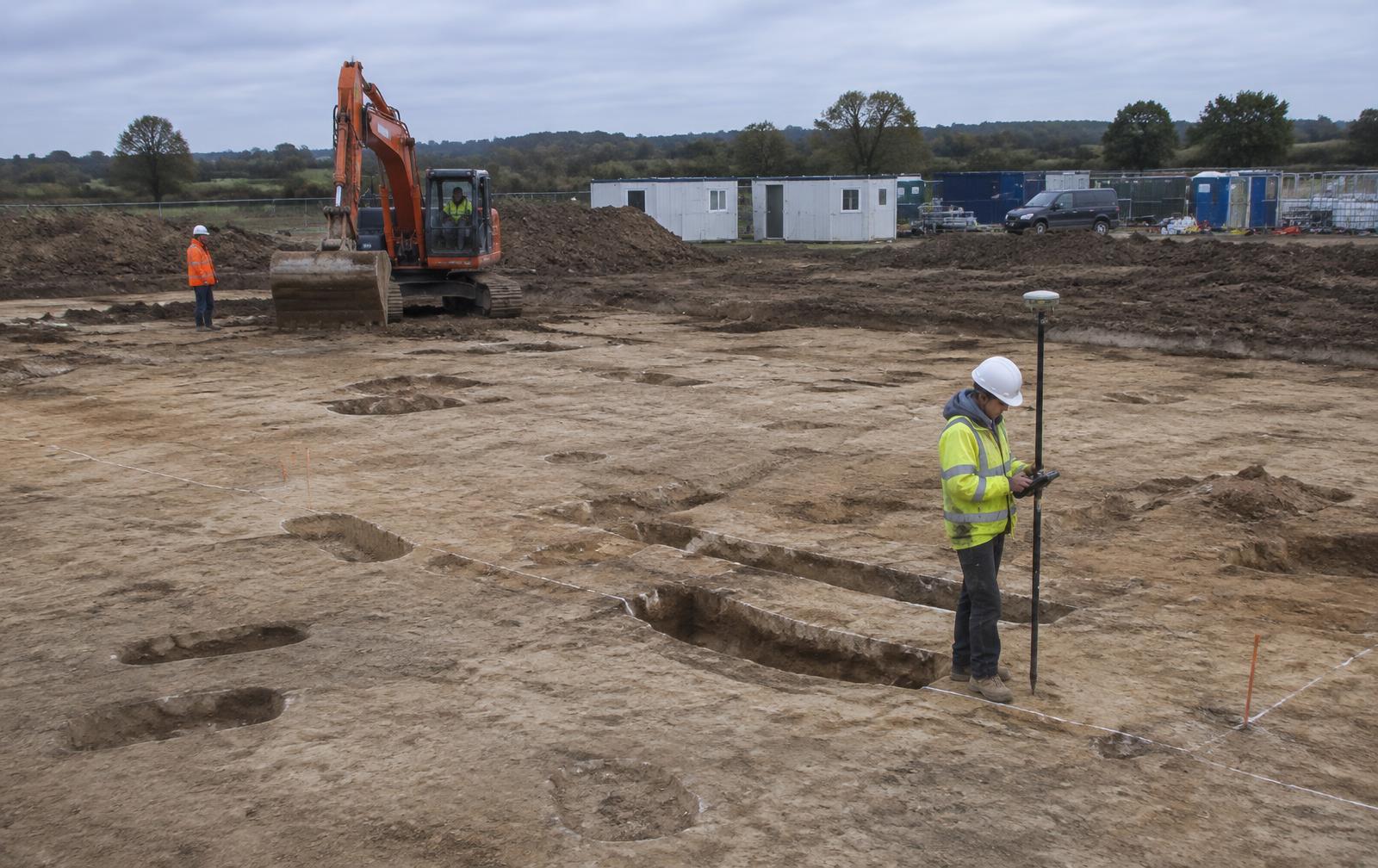
Large-scale archaeological excavation
Open-area excavation on multi-hectare development sites is a logistics and resourcing discipline as much as an archaeological one. The variable that damages development programmes is not the archaeology — it is whether the contractor can hold the resource on site.
- Scale
- Single hectare to multi-hectare sites
- Methods
- Open-area, strip, map and sample, phased release
- Interfaces
- Enabling works, groundworks, plot release
- Includes
- Post-excavation assessment and archive
Resourcing
Excavation at scale is a resourcing commitment
Large sites fail on staffing, plant and supervision, not on technique. We would rather tell you at tender stage that a programme is undeliverable than agree to it and hand you the delay.
- Defined field team structure with named supervision and clear reporting lines
- Plant, welfare and spoil management planned with the contractor before mobilisation
- Survey control, digital recording and finds processing set up to keep pace with excavation
- Weekly programme reporting against the agreed baseline, with early warning of divergence
- Environmental sampling and specialist input planned into the fieldwork rather than added afterwards
Scope
What a large excavation package includes
- Approved scheme
- Written Scheme of Investigation covering method, phasing, sampling strategy, unexpected discovery protocol and reporting, agreed with the authority.
- Site setup
- Access, welfare, survey control, spoil strategy, plant schedule and interface arrangements with the principal contractor.
- Excavation
- Machine stripping, hand excavation and recording of features, digital survey, photography, sampling and finds recovery.
- Phased release
- Completion and sign-off of discrete areas so groundworks can follow the archaeology rather than wait for the whole site.
- Post-excavation
- Assessment report, specialist analysis, archive preparation and deposition, and publication where the results require it.
- Discharge evidence
- The reporting package the authority needs to confirm the archaeological condition has been satisfied.
Common questions
Large-scale excavation: common questions
How much does a large archaeological excavation cost?
Cost is driven by area, feature density, depth and complexity of deposits, ground conditions, sampling requirements and the level of post-excavation analysis agreed. A credible figure requires the evaluation results and the approved scheme. Any contractor quoting a rate per hectare without those is guessing, and the guess usually resolves against the developer.
How is excavation programmed alongside construction?
Archaeology normally sits in the enabling works window, and on phased sites it follows plot release. The workable approach is to agree a phased archaeological programme in the approved scheme, then hold weekly interface with the contractor so handover of cleared areas is predictable.
What happens if something unexpected is found during excavation?
Significant unexpected discoveries — human remains, a scheduled-monument-quality feature, deep waterlogged deposits — change the scope. That is why the approved scheme should state in advance how such findings are assessed, who is notified, and how additional work is instructed and priced.
Does excavation include reporting and archiving?
It must. Fieldwork alone does not discharge a planning condition. Post-excavation assessment, specialist analysis, archive deposition and — on significant sites — publication are part of the obligation, and are a common source of unbudgeted cost when they are left out of the original appointment.
Project review
Tendering an archaeology package?
Send the scheme, the evaluation data and the programme constraints. We will tell you plainly whether the work is deliverable in the window you have, and what it would take.