Technical capability
Technical archaeology with direct accountability
Cambridge Development Archaeology connects planning review, field delivery, reporting and condition discharge through one clear line of technical responsibility.
- Base
- Cambridge
- Discipline
- Development-led archaeology
- Structure
- Independent, practitioner-led
- Scope
- Assessment to condition discharge
Standards
The standards development-led archaeology is held to
Development archaeology is not discretionary work. It is delivered against national planning policy, published professional standards, and the local authority's own requirements — and it is the authority that decides whether the output is acceptable.
- Planning policy
- Archaeological requirements derive from national planning policy on the historic environment and from local plan heritage policy, applied through conditions.
- Professional standards
- Fieldwork, recording, reporting and archiving are delivered to recognised sector standards and guidance for each stage of work.
- Authority requirements
- The local authority archaeological advisor sets briefs, approves Written Schemes of Investigation and confirms whether conditions are satisfied.
- Archive obligations
- Finds, records and digital data are prepared and deposited to the receiving repository's requirements. This is part of the obligation, not an optional extra.
- Health & safety
- Work is planned and delivered under CDM arrangements and, on contractor-led sites, within the principal contractor's permit and induction regime.
Named practitioner
Adrian Wellard, founder and archaeologist
Adrian brings archaeological field and supervisory experience from 2018 onward, together with excavation, recording, surveying, QGIS and wider construction-site knowledge.
The practice is built around direct practitioner involvement from initial review through field delivery and reporting. That gives clients a named point of responsibility for scope, programme and communication.
Meet Adrian and review his experience →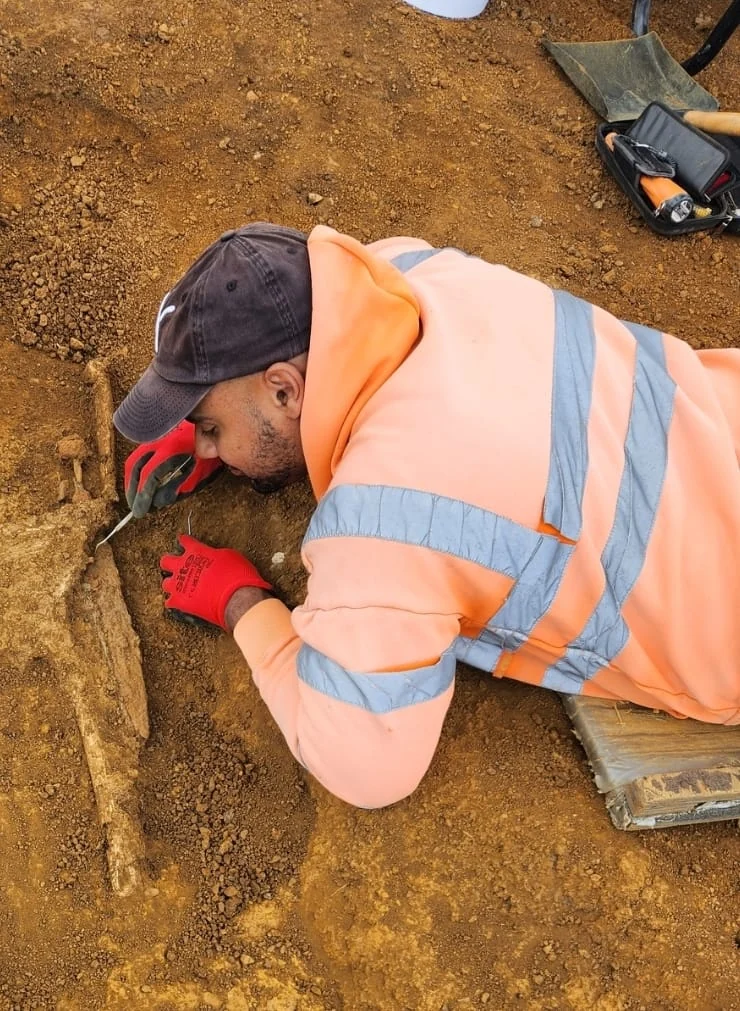
How we are structured
A clear route from requirement to delivery
Clients deal directly with the person responsible for understanding the archaeological requirement, shaping the scope and communicating what changes on site.
Direct practitioner involvement
The archaeological requirement is reviewed by the practitioner involved in delivery, reducing hand-offs between tender, fieldwork and reporting.
Procurement-ready information
Relevant references, project information and supporting documents are provided directly for appropriate tender and procurement enquiries.
Defined scope and responsibility
Scope, assumptions, exclusions, reporting stages and archive obligations are made visible before work starts, with one route for technical and commercial decisions.
Programme-led advice
Fieldwork windows are tested against the approved method, site constraints and reporting obligations so that programme risk is identified at tender stage.
How we work
What clients can expect operationally
- A written position on what the planning requirement actually is before any scope is priced
- Scope, duration, staffing, plant and cost stated with assumptions and exclusions made explicit
- Direct liaison with the local authority archaeological advisor, with agreements recorded in writing
- One point of technical and commercial responsibility across the whole archaeological sequence
- Interim results as soon as they are known, not held back until a final report
- Weekly programme reporting on live fieldwork, with early warning of divergence
- A pre-agreed route for instructing and pricing unexpected discoveries
- Post-excavation, archive and reporting obligations included in the original scope
Project review
Preparing a tender or consultant appointment?
Send the brief, programme and procurement requirements. We will return the relevant scope information and supporting material for your review.