Excavation and field judgement
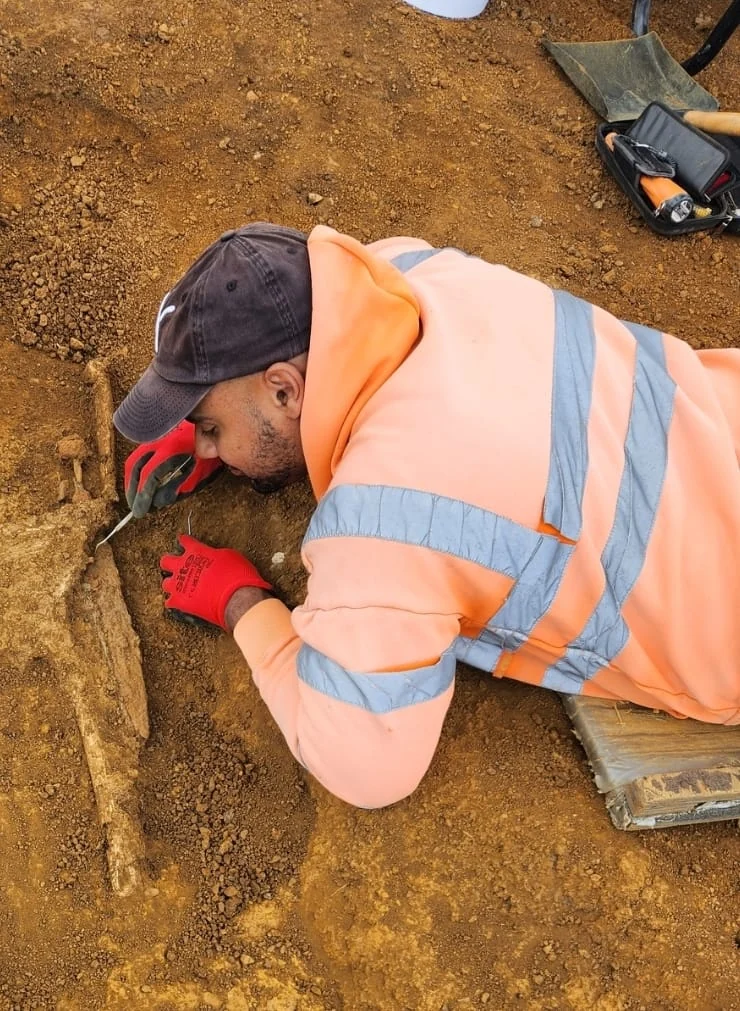
Careful hand excavation, archaeological observation and adapting field decisions to the evidence exposed on site.
Founder and named archaeologist
Practical archaeological field experience, applied to the realities of development programmes.
Adrian founded Cambridge Development Archaeology to give clients a direct line between site review, field decisions and clear communication. His background combines excavation and recording with supervision, surveying, QGIS and experience of construction and utilities environments.
Professional practice
Development archaeology depends on disciplined recording in the ground and timely decisions around it. Adrian’s experience spans both the detailed field task and the coordination needed to keep work moving safely and coherently.
Careful hand excavation, archaeological observation and adapting field decisions to the evidence exposed on site.
Context recording, photography, measured information and sample handling that preserve the evidence needed for later assessment and reporting.
Allocating work, coordinating field teams and communicating changing site requirements while maintaining consistent records.
Field surveying and QGIS-supported practice used to locate, organise and interpret archaeological information.
On your project
The practice is built around direct practitioner involvement rather than an anonymous hand-off between sales, fieldwork and reporting teams.
Experience record
Professional record
Adrian’s earlier fieldwork was delivered with archaeological organisations before Cambridge Development Archaeology was founded. It informs the practical approach he now brings to the practice.
The public profile and course information below provide further professional context. Our editorial standards explain how technical guidance, practitioner information and project material are maintained.
Project review
Send the planning condition, brief, programme and available reports for a practical first review.