Prepared by Cambridge Development Archaeology with practitioner input from Adrian Wellard.
Sources, review dates and corrections →Start with the approved WSI
I read the Written Scheme of Investigation as a set of working instructions, not as a document that was finished when it gained approval. I need to understand the site aims, trench or excavation limits, sampling strategy, reporting line, monitoring arrangements and what requires agreement before the method can change.
The drawings and the written method have to agree. If the trench schedule, development layout or site conditions have moved since approval, that needs resolving before a machine is asked to follow the wrong plan.
Establish survey control and the working area
The site needs dependable spatial control from the beginning. That means checking the coordinate system, control points, GPS setup and the relationship between archaeological areas, the development footprint and any exclusion zones.
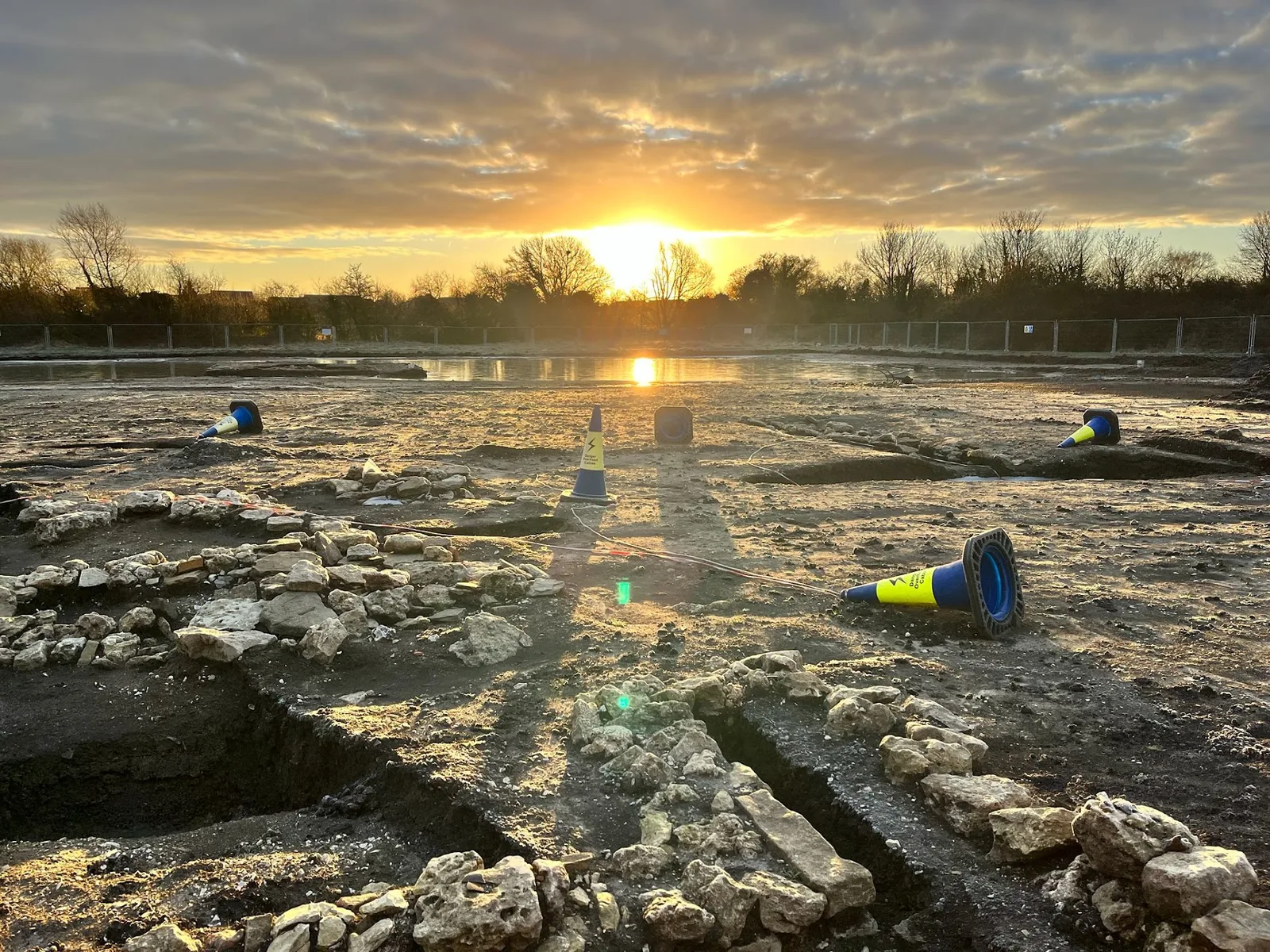
Trenches or areas are set out against the approved plan, then checked on the ground for access, slopes, standing water, overhead restrictions and practical room for spoil. A line that works on a drawing can be undeliverable once plant and safe working distances are added.
Check plant, services and site interfaces
Machine opening depends on the right plant, the right bucket and an operator who understands that the archaeologist controls the final level. The supervisor should agree signals, working direction, spoil placement and the stop procedure before stripping begins.
Service information, CAT and Genny scanning, permits, inductions and the principal contractor's controls need to be live rather than assumed. Archaeology often shares access with ground investigation, ecology or enabling works, so the daily interface has to be explicit.
Make recording and sampling ready before discovery
Context records, drawing and photography equipment, sample materials, finds bags, labels and registers should be ready before the first feature appears. If the recording system starts late, inconsistencies follow the project all the way into reporting.
Environmental sampling and finds recovery are part of the field method, not an optional task after excavation. The team needs to know what is being sampled, how identifiers are controlled and where material moves at the end of each day.
Give the team a shared picture
A useful briefing covers the archaeological aims, the day's area, individual responsibilities, safety controls, recording expectations and what must be escalated. Work allocation should match experience while giving less experienced archaeologists a clear route to ask for a decision.
The client and project team also need to know what information they will receive and when. Early communication about changing density, access or programme is far more useful than explaining an overrun after the planned handover date.
Practitioner field note. Published 20 September 2026 from Adrian’s first-person account of the checks he uses when preparing archaeological work.